
An Over-Eager Beaver? Initial Interest Confusion and Potential Lessons from Buc-ee’s Trademark Enforcement Strategy
Trademark enforcement presents a dilemma for brand owners: the legal demand to protect distinctive marks may clash with the business demand to maintain consumer goodwill. Buc-ee’s, Ltd. (“Buc-ee’s”), the Texas-based chain of “highway oases” known for massive facilities, clean restrooms, and a beloved beaver mascot, is navigating this tension in very public fashion. The company’s trademark litigation against several competitors using animal mascots has drawn criticism from Ohio Governor Mike DeWine, commentary from comedian John Oliver on Last Week Tonight, and substantial social media discussion. While trademark owners have legitimate, and indeed, legally necessary, reasons to protect their brands, the Buc-ee’s situation illustrates how consumers unfamiliar with trademark law may perceive enforcement efforts as little more than corporate overreach and presents a timely case study in the tension between enforcing intellectual property rights and preserving the goodwill that makes those rights valuable in the first place.
The Marks at Issue
Buc-ee’s: The gas station chain owns trademark registrations for its smiling, wide-eyed cartoon beaver mascot:

First used in 1982, the Buc-ee’s trademark and logo have evolved from a conceptually strong mark to one likely reaching famous-mark status. With that status comes significant legal protection and, some would argue, heightened responsibility in how that protection is exercised. Buc-ee’s appears to have accepted that challenge, taking an approach to enforcement that some have argued goes too far. Recent lawsuits include:
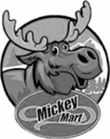
Buc-ee’s, Ltd. v. Coles IP Holdings, LLC, No. 3:26-cv-414 (N.D. Ohio Feb. 18, 2026) (“Mickey’s”): An Ohio convenience store chain using a cartoon moose mascot with red in its signage and branding.


Buc-ee’s, Ltd. v. Teddy’s Market, LLC, No. 1:26-cv-2478 (N.D. Ga. May 1, 2026) (“Teddy’s”): A Georgia convenience store using a cartoon bear mascot, which Buc-ee’s alleges shares numerous design similarities with its beaver logo.



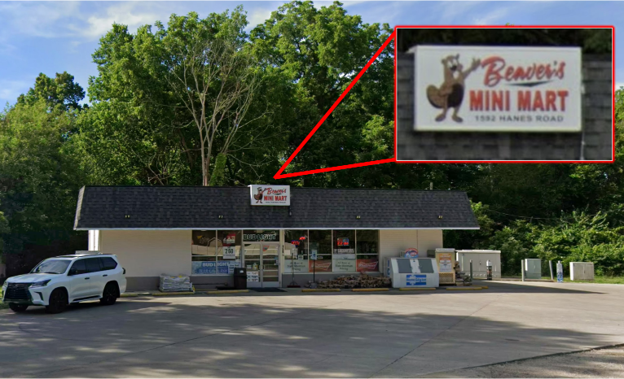
Buc-ee’s, Ltd. v. Hanes Road Carryout, Inc., No. 3:26-cv-272 (S.D. Ohio July 28, 2026) (“Beaver’s Mini Mart”): A small carryout store in the town of Beavercreek, Ohio, using a cartoon beaver logo with red signage.1
The Public Reaction
Buc-ee’s litigation strategy has attracted substantial negative attention. On July 26, 2026, John Oliver’s Last Week Tonight featured a segment criticizing Buc-ee’s for suing companies with animal mascots.2 During the segment, Oliver launched a line of “Buc-Off” merchandise parodying the Buc-ee’s beaver and invited the company to sue him.3
Ohio Governor Mike DeWine—who had previously participated in Buc-ee’s grand opening ceremony for its first Ohio location on April 6, 20264—publicly criticized the Beaver’s Mini Mart lawsuit. On August 5, 2026, Governor DeWine called the lawsuit “absurd” and “ridiculous,” noting that “you expect to find in Beaver Creek things named ‘beaver.’”5 He urged Buc-ee’s to dismiss the suit, explaining that “all they’re doing is creating ill will” and that the company should “try to nurture” its brand “instead of throwing cold water on it.”6
Public consumer sentiment has matched Oliver’s and DeWine’s statements. One Buc-ee’s customer described the Mickey’s litigation as “petty,” while a Mickey’s customer stated that “it seems like the big guy is trying to run over the little guy.”7 Teddy’s Market appended online commentary to its responsive pleading, with commenters calling Buc-ee’s “the big bully beaver”8 and suggesting it be renamed “Sue-ee’s” or “Kar-ens.”9 Another interpreted this type of litigation as implying that Buc-ee’s “‘[t]hinks Georgians are too stupid to tell a beaver from a bear” and wondering “Do they not realize this kind of nonsense insults their customer base?”10
These reactions underscore a reality trademark owners must confront: consumers often do not understand why enforcement may be legally necessary. When high-profile litigation casts a brand owner as a perceived corporate bully, even legally sound claims may generate reputational costs exceeding the legal benefits.
Evaluating Buc-ee’s Claims: Where Initial Interest Confusion Helps and Where It May Not
Buc-ee’s trademark infringement claims have been met with a strong response and even the smallest defendant does not appear ready to acquiesce. As is often the case when a trademark involves goods and services sold to ordinary consumers, even those who may be passionate about the brand asserted, claims of bullying and overreach abound. Because all of the lawsuits involve gas stations and convenience stores, the dispute may appear to turn on one factor—the similarity of the marks.11 As one defendant put it: “[C]onsumers can readily distinguish a moose from a beaver.”12
Despite public criticism, Buc-ee’s claims are not without legal foundation. Courts determining mark similarity “should not examine the marks side by side but instead must determine, in the light of what occurs in the marketplace, whether the mark will be confusing to the public when singly presented.” Progressive Distrib. Servs., Inc., 856 F.3d 416, 432 (6th Cir. 2017) (internal quotes omitted). Unlike online commentators viewing side-by-side comparisons, consumers often lack that luxury. As one Texas jury found, an animal logo for a gas station—combined with additional design elements—may create a likelihood of confusion.13
Buc-ee’s also has invoked the doctrine of “initial interest confusion,” which may prove to be the roadside giant’s strongest argument. The Sixth Circuit explained this doctrine with a helpful hypothetical:
Suppose that you are taking a long roadtrip, you have become very hungry, and you are keeping an eye out for a McDonald’s, which is your fast food restaurant of choice. Soon you spot a “McDonald’s” sign by an exit. You take the exit and follow the signs, looking forward to your favorite McDonald's hamburger. But—behold—it’s a Burger King. The signs were misleading. You are not so fond of Burger King but, having already made the detour and loath to waste even more time, you reluctantly buy a Whopper and get on with your trip.
Groeneveld Transp. Efficiency, Inc. v. Lubecore Int’l, Inc., 730 F.3d 494, 518 (6th Cir. 2013). This doctrine may support Buc-ee’s theory that highway travelers could be drawn to a competitor’s store based on initial confusion, even if that confusion dissipates upon closer inspection. However, the strength of this argument varies considerably across the pending suits.
Teddy’s and Mickey’s: Closer Analog for Initial Interest Confusion
Initial interest confusion works most effectively for Buc-ee’s in the Teddy’s and Mickey’s suits.14 In the Teddy’s matter, the exterior and interior fit and finish of the defendant’s stores more closely resemble Buc-ee’s trade dress—the larger storefront, prominent signage, and commercial atmosphere Buc-ee’s has cultivated. A traveler seeing a facility of similar scale and visual branding from the highway has greater potential for initial confusion, even if the specific mascot differs on closer inspection. Mickey’s presents similar visual and commercial similarities strengthening the confusion argument. Therefore, there is at least some credence to the argument that these are not cases where consumers would immediately differentiate based solely on a different animal.
Beaver’s Mini Mart: Does Scale and Fit/Finish Matter?
The Beaver’s Mini Mart suit presents a different consideration. Unlike Teddy’s or Mickey’s, Beaver’s Mini Mart lacks the same visual or commercial similarity to Buc-ee’s. Its storefront has the appearance of a modest, rural roadside convenience store—the kind of establishment one might expect to find in any small town—rather than the large-format “highway oas[i]s” designed to evoke the Buc-ee’s experience.15 The scale, presentation, and commercial context differ significantly.
For these reasons, the initial interest confusion theory that works in Buc-ee’s favor for the Teddy’s and Mickey’s suits, but may work against it if Buc-ee’s chooses to press the issue in the Beaver’s Mini Mart matter. A consumer passing a small-town convenience store with a beaver logo is unlikely to be drawn off the highway expecting a Buc-ee’s experience. The commercial context simply does not support the same initial interest confusion narrative. The defendant’s location in Beavercreek, Ohio (where, as Governor DeWine noted, beaver-themed businesses might reasonably be expected) adds another dimension potentially mitigating initial interest confusion.
Moreover, treating Beaver’s Mini Mart as presenting the same level of consumer risk as Teddy’s or Mickey’s may strain credibility with courts and consumers alike. When the public sees a major corporation pursuing a small-town store with fundamentally different market positioning, it reinforces the “corporate bully” narrative and could undermine the perception of Buc-ee’s more meritorious claims.
Buc-ee’s situation demonstrates the tough position that trademark holders are often placed in, as the foregoing strategic considerations must be viewed against the legal backdrop that makes enforcement necessary. A trademark owner’s failure to police its rights against third-party uses can, over time, result in those rights narrowing or weakening. See, e.g., Maker’s Mark Distillery, Inc. v. Diageo N. Am., Inc., 679 F.3d 410, 420 (6th Cir. 2012) (“[E]xtensive third-party uses of a trademark [may] substantially weaken the strength of a mark.”). While trademark owners can choose their battles, at some point they must go to the mat or risk losing ground to encroachment. Often, the question presented is not whether to protect their mark, but how.
Takeaways: Balancing Brand Protection with Brand Perception
Consider Proactive Enforcement: Trademark owners have strong reasons to police their marks. Indeed, failure to enforce trademark rights against potential infringers can weaken the distinctiveness as third-party uses increase. But effective brand protection need not turn every dispute into a headline. Earlier, less visible intervention often achieves the same legal objectives without the reputational risks of public litigation. For example, non-adversarial cease and desist letters, licensing arrangements, negotiated modifications to the allegedly infringing mark, coexistence agreements, or confidential alternative dispute resolution methods are possible workaround strategies.
Balancing Public Perception with Legal Frivolousness: While the public reaction has been negative, Buc-ee’s claims are not necessarily without legal foundation. But a legal foundation does not equate to an action being well-received in the public sphere. Rather than being put on the defensive and having to respond to criticism of their enforcement efforts, businesses may benefit from proactively communicating the motivations and legal justifications behind lawsuits. Doing so may help stakeholders understand that the initial reaction of “look at the logos—they’re different” does not fully capture the legal analysis.
Beware the Pyrrhic Victory: Brand goodwill represents real value and is arguably the very value trademark protection is designed to preserve. When enforcement efforts generate headlines like “Buc-ee’s sues small Georgia convenience store” or draw criticism from state governors, the reputational cost may outweigh the legal benefit to the business. To this end, Governor DeWine raises an important point: Businesses should avoid inadvertently throwing “cold water” on their goodwill, even if they believe they are acting within their legal rights. A business that wins in the court of law but loses in the court of public opinion may find the victory hollow.
Conclusion
Trademark owners may often feel caught between a rock and a hard place. Companies that build valuable marks must protect their rights or risk losing them. But a lawsuit that seems legally sound may nonetheless prove costly if it damages the very brand equity it seeks to protect. The most effective trademark enforcement strategies will account for both the courtroom and the court of public opinion, calibrating each enforcement action to protect the brand while preserving the goodwill that makes the brand worth protecting.
1 See here. (last accessed September 2, 2026).
2 Roger Dooley, John Oliver Dared Buc-Ee’s to Sue. It Sued a Family Carryout Instead., Forbes (Aug. 7, 2026, 12:29 PM).
3 Last Week Tonight, Buc-ee’s #lastweektonight, at 0:51 (YouTube, July 27, 2026)
6 Id.
7 Def.’s Answer, Defenses, and Countercls., Ex. E at 8-10, ECF No. 19-5, Buc-ee’s, Ltd. v. Teddy’s Market, LLC, No. 1:26-cv-02478-VMC (N.D. Ga. May 1, 2026).
8 Id., Ex. D at 16, ECF No. 19-4.
9 Id., Ex. D at 3.
10 Id., Ex. D at 38.
11 In the courtroom, it isn’t always quite that simple. Courts assess likelihood of confusion across several factors. For example, in the Sixth Circuit, where the Mickey’s litigation arose, courts evaluate likelihood of confusion by applying the Frisch factors, considering: (1) the strength of the plaintiff’s mark; (2) the relatedness of the goods or services; (3) the similarity of the marks; (4) evidence of actual confusion; (5) marketing channels used; (6) the likely degree of purchaser care; (7) the defendant’s intent in selecting its mark; and (8) the likelihood of expansion of the product lines. See Gen. Motors Corp. v. Lanard Toys, Inc., 468 F.3d 405, 412 (6th Cir. 2006).
12 Coles IP Holdings, LLC’s Answer, Affirmative Defenses, and Countercls. 1, Dkt. No. 15, Buc-ee’s, Ltd. v. Coles IP Holdings, LLC, No. 3:26-cv-00414-JRK (N.D. Ohio Feb. 18, 2026).
14 Interestingly, Buc-ee’s expressly alleged that Teddy’s is causing initial interest confusion, but whether initial interest confusion is even actionable in that case remains an open question. See PlayNation Play Sys., Inc. v. Velex Corp., 924 F.3d 1159, 1167 n.4 (11th Cir. 2019) (noting that the Eleventh Circuit has not yet recognized the doctrine of initial interest confusion).
15 Compl., ¶ 9, Dkt. No. 1, Buc-ee’s, Ltd. v. Hanes Road Carryout, Inc., No. 3:26-cv-272 (S.D. Ohio July 28, 2026).